Tuesday, April 7, 2015

Acharya Tulsi, 1998 - Stamp, First Day Cover and Brochure


Besides being a profound scholar in Rajasthani and Hindi languages and Jaina Agamas in particular, Acharya Tulsi has authored a few Sanskrit books too on Jainism. These include:
जैन-सिद्धान्त-दीपिका - Jaina-Siddhānta-Dīpikā
श्री-भिक्षु-न्याय-कर्णिका - Śrī-Bhikṣu-nyāya-karṇikā
मनोनुशसनम् - Mano'nuśāsanaṃ
पञ्च-सूत्रम् - Pañcasūtraṃ


The India Post honoured the great ascetic Shri Acharya Tulsi by issuing a commemorative stamp. A First Day Cover along with a brochure too were released on 20.10.1998. The stamp and the postmark are inscribed with a symbol that has the Sanskrit phrase:

संयमः खलु जीवनम्
saṁyamaḥ khalu jīvanam
"Self-control indeed is Life"
The Postmark

The FDC


The Brochure 2 & 1

BIPEX-86, Meghdoot, 1986 - Special Cover


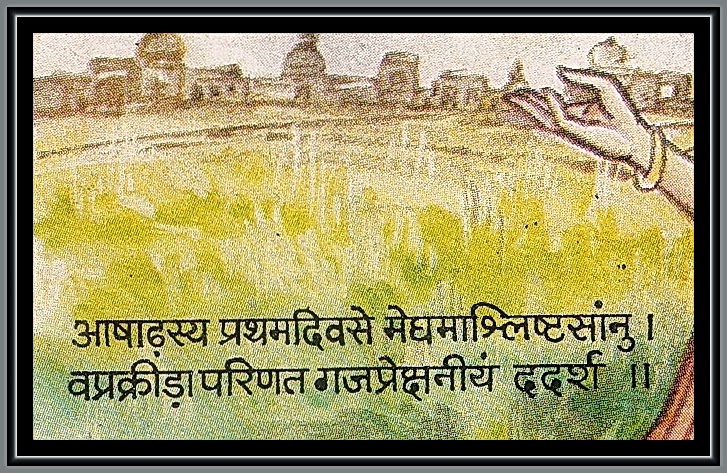
Bihar Postal Circle, Patna issued this historic special cover  - a numbered* and signed** limited edition - with pigeon cancellation on the occasion of BIPEX-86 (Bihar Philatelic Exhibition-86) on 26.12.1986. No information, as is general with India special covers, about the quantity printed or the designer's name, etc. is available. I salute the Conceptor and the Designer for having conceived the theme of Yakṣa from the Meghadūtaṃ, one of Kālidasa's most illustrious and charming works, with the verse printed on it in Sanskrit.***


तस्मिन्नद्रौ कतिचिदबलाविप्रयुक्तः स कामी
नीत्वा मासान् कनकवलयभ्रंशरिक्तप्रकोष्ठः 
आषाढस्य प्रथमदिवसे मेघमाश्लिष्टसानुं
वप्रक्रीडापरिणतगजप्रेक्षणीयं ददर्श
tasminn adrau katicid-abalā-viprayuktaḥ sa kāmī
nītvā māsān kanakavalaya-bhramśarikta-prakoṣtaḥ

āṣāḍhasya prathama-divase megham-āśliṣta-sānuṃ
vaprakrīḍā-pariṇata-gaja-prekṣanīyaṃ dadarśa

-- Meghadūtaṃ, 1.2.

[Separated from his wife, having passed several months on these hills pining with desire, his arm having become bare by the slipping off of the golden bracelet;] on the first day of Āṣāḍha he saw a mountain-top-embracing cloud, to all appearance, like a butting elephant preparing to thrust against a wall.
-- (Tr. Courtesy: Colonel H. A. Ouvry, The Meghadūta or Cloud Messenger by Kālidāsa, Williams & Norgate, Edingburgh,1868)

-----------
*I welcome information regarding the number printed from philatelic fraternity. 
**The cover is signed by the then Postmaster General, Sri M. S. Raghavan.
***Mis-spelt at two places on the cover : सांनु for सानुं and प्रेक्षनीयं for प्रेक्षणीयं.

Unwanted Notes 
1. Meghadūtaṃ is a famous sandeśa-kāvya of Kālidāsa. It has 111 ślokas or stanzas/verses.  
2. Sanskrit Commentaries on this poem: 
    Mallinātha (named, Sañjīvanī, Bombay, 1895)
    Dakṣināvartanātha (ed. T. Gaṇapati Śāstrin, 1919)
    Vallabhadeva (ed. Eugen Hultzsch,1911)
    Seṣarāj Śarmā Regmī (named, Saraḷā, 1964)
3. An orientalist, Horace Hayman Wilson, first translated Meghadūtaṃ into English and published it in  1813. Thereafter a number of editions and translations have come out.

Raghunath - 3rd Battalion The Jammu & Kashmir Rifles, 2005 - Army Cover


Heroism, valour and dedication to duty have been synonymous with the 3rd Battalion, Jammu and Kashmir Rifles ever since it came into being on 15th April 1856 at Raghunath Mandir, Jammu.


प्रशस्ता रणवीरता
praśastā raṇavīratā
"Valour in battle is praiseworthy"


In commemoration of the 150th anniversary of the Battalion, the Army Postal Service issued a special cover with the insignia, a special cancellation and a brochure on 17.04.2006.

Dr Indra Chandra Shastri, 2004 - Stamp, First Day Cover


Dr. Shastri became Secretary, Akhil Bharatiya Sanskrit Sahitya Sammelan in 1954-58. In 1957, he organised Delhi Session of All India Oriental Conference. In 1959, he was appointed as the first Head of the Department of Sanskrit in the Institute of Post Graduate Studies in the University of Delhi. Due to loss of eyesight in 1961, he resigned from the post. He was subsequently appointed Professor Emeritus under the University Grants Commission Scheme. His writings were marked with high scholasticism. He wrote about 70 books and more than 600 research papers.


India Post honoured Dr Indra Chandra Shastri by releasing a commemorative stamp, FDC and brochure on 27.05.2004.


Scindia School Centenary, 1997 - First Day Cover


The Scindia School celebrated its centenary on 20.10.1997. India Post issued a se-tenant stamp in the denomination of 500P each. The cancellation on the FDC issued on the occasion is inscribed with the emblem of the school which has these words in Sanskrit:
   
सा विद्या या विमुक्तये
sā vidyā yā vimuktaye
That is knowledge which liberates


A motto is to convey an ideal of an individual or institution. It has to conform to the context. Most of our mottos are taken from Sanskrit scriptures. The context may differ there but the wordings will suit for adaptation for an institution. Here is one which is a philosophical maxim taken from the Viṣṇu-Purāṇa, 1.19.41:


The cancellaltion

तत्कर्म यन्न बन्धाय सा विद्या या विमुक्तये।
आयासायापरं कर्म विद्याऽन्या शिल्पनैपुणम्॥
tat karma yanna bandhāya  
sā vidyā yā vimuktaye
āyāsāyāparam karma 
vidyā anyā śilpanaipuṇam


That is karma which does not create bondage, that is knowledge which will liberate -- all other  karma are (for) mere hardship and all other knowledge for skill in crafts.


Upaniṣads teach us of two vidyās; one parā and the other aparā. Parā is spiritual (esoteric) and apara the entire spectrum of worldly knowledge (lower). Only the parā-vidyā leads us to the Supreme (imperishable) and liberates from the cycle of births and deaths. The pauraṇic verse quoted above clearly reveals the Upaniṣadic teaching of the Muṇḍaka, 1.1.4-5 and Chāndogya, 7.1.2-3.

Unwanted Notes

मुण्डकोपनिषत् (1.1.4-5)

द्वे विद्ये वेदितव्ये इति ह स्म
यद्ब्रह्मविदो वदन्ति परा चैवापरा च ॥ ४ ॥
तत्रापरा ऋग्वेदो यजुर्वेदः सामवेदोऽथर्ववेदः
शिक्षा कल्पो व्याकरणं निरुक्तं छन्दो ज्योतिषमिति ।
अथ परा यया तदक्षरमधिगम्यते ॥ ५ ॥


छान्दोग्योपनिषद् (7.1.2-3) 
॥ प्रथमः खण्डः ॥
अधीहि भगव इति होपससाद सनत्कुमारं नारदस्तँ होवाच यद्वेत्थ तेन मोपसीद ततस्त ऊर्ध्वं वक्ष्यामीति स होवाच ॥ १ ॥
ऋग्वेदं भगवोऽध्येमि यजुर्वेदँ सामवेदमाथर्वणं चतुर्थमितिहासपुराणं पञ्चमं वेदानां वेदं पित्र्यँ राशिं दैवं निधिं वाकोवाक्यमेकायनं देवविद्यां ब्रह्मविद्यां भूतविद्यां क्षत्रविद्यां नक्षत्रविद्याँ सर्पदेवजनविद्यामेतद्भगवोऽध्येमि ॥ २ ॥
सोऽहं भगवो मन्त्रविदेवास्मि नात्मविच्छ्रुतँ ह्येव मे भगवद्दृशेभ्यस्तरति शोकमात्मविदिति सोऽहं भगवः शोचामि तं मा भगवाञ्छोकस्य पारं तारयत्विति तँ होवाच यद्वै किञ्चैतदध्यगीष्ठा नामैवैतत् ॥ ३ ॥
नाम वा ऋग्वेदो यजुर्वेदः सामवेद आथर्वणश्चतुर्थ इतिहासपुराणः पञ्चमो वेदानां वेदः पित्र्यो राशिर्दैवो निधिर्वाकोवाक्यमेकायनं देवविद्या ब्रह्मविद्या भूतविद्या क्षत्रविद्या नक्षत्रविद्या सर्पदेवजनविद्या नामैवैतन्नामोपास्स्वेति ॥ ४ ॥
स यो नाम ब्रह्मेत्युपास्ते यावन्नाम्नो गतं तत्रास्य यथाकामचारो भवति यो नाम ब्रह्मेत्युपास्तेऽस्ति भगवो नाम्नो भूय इति नाम्नो वाव भूयोऽस्तीति तन्मे भगवान्ब्रवीत्विति ॥ ५ ॥


Monday, April 6, 2015

81 Armoured Regiment, 2005 - Army Cover


On 16th May, 2005, the Colour Presentation to 81 Armoured Regiment was held ceremoniously. The Army Postal Service came out with a special cover, brochure and cancellation. 

The insignia of the 81 Armoured Regiment contained a Sanskrit motto : शौर्यं तेजो युद्धे -- "śauryam tejo yuddhe" -- which means -- "heroism and boldness in battle".


I have to suppose that these Sanskrit words are coined from the Bhagavad-gītā,18.43. There the verse is:

शौर्यं तेजो धृतिर्दक्ष्यं युद्धे चाप्यपलायनम् ।
दानं ईश्वरभावश्च क्षत्रं कर्म स्वभावजम् ॥

śauryam tejo dhṛtir dakṣyam 
yuddhe cāpyapalāyanam
dānam īśvara-bhāvaśca 

kṣatram karma svabhāvajaṁ

It would be appropriate to refer to the original context of the verse and its bhāṣya (commentary) by Śrī Śaṅkara.

In the Vaṛnāśrama concept, the natural duties of the Kṣatriyas are explained thus:  

Heroism, boldness, fortitude, capability, and also not retreating from battle, generosity and lordliness. 


The Commentary

Svabhāvajam, the natural; kṣatra-karma, [A variant reading is kṣatram karma. Tr.] enjoined duties of the Kṣatriyas, of the Kṣatriya caste; are śauryam, heroism; tejaḥ, boldness; dhṛtiḥ, fortitude, as is seen in the case of one who is not depressed under all circumstances, being sustained by doggedness; dakṣyam, capability engagement without confusion in duties which suddenly present themselves; api ca, and also; apalāyanam, not retreating; yuddhe, from battle, not fleeing from enemies; dānam, generosity, being free in the distribution of gifts; īśvara-bhāvaḥ, lordliness, manifesting (exercising) rulership over those who have to be ruled.
-- (Tr. Courtesy: Swami Gambhirananda)


Bhagavad Gita, 1968 - Stamp, First Day Cover and Brochure

                                                                                           
When doubts haunt me, when disappointments stare me in the face, and I see not one ray of hope on the horizon, I turn to Bhagavad-Gita and find a verse to comfort me; and I immediately begin to smile in the midst of overwhelming sorrow. My life has been full of external tragedies and if they have not left any visible or invisible effect on me, I owe it to the teaching of the Bhagavad Gita. (Mahatma Gandhi)

On 25.08.1978 a special stamp was issued to commemorate the Bhagavad Gita. The first half of Chapter 2, Verse 47, i.e., "कर्मण्ये वाधिकरस्ते मा फलेषु कदाचन" in Sanskrit has been inscribed on the stamp. Two other verses are displayed in the background of the
FDC.
यदा यदा हि धर्मस्य ग्लानिर् भवति भारत 
अभ्युत्थानमधर्मस्य तदात्मानं सृजाम्याहम्
परित्राणाय साधूनां विनाशाय च दुष्कृताम्
धर्मसंस्थापनार्थाय संभवामि युगे युगे

Brochure-2
Brochure-1